
Franklin County Criminal Records
A Franklin County criminal court record is the case-level file kept by the court after a criminal matter opens. It may begin with a complaint, information, citation, or other charging document, then grow through arraignment, bond events, motions, hearings, pleas, trial settings, disposition, sentencing, fines, fees, and compliance entries. The record is not the same as a sheriff arrest report. It is also not the same as a jail roster entry. Court records focus on what happened in the judicial case after a charge reached the court.
Franklin County uses Idaho's District Court and Magistrate Division structure. District Court handles felony criminal cases and other general-jurisdiction matters. The Magistrate Division handles misdemeanors, infractions, preliminary felony proceedings, and many first-appearance events. The official Franklin County court page lists District Judge Robert C. Naftz and Magistrate Judge Eric S. Hunn. It also lists deputy clerks by docket area, including Linda Hampton for district civil and criminal matters and Maria Delgado for magistrate criminal and juvenile matters.
The Franklin County Prosecuting Attorney's Office is the local office that files and manages state criminal charges after arrest.
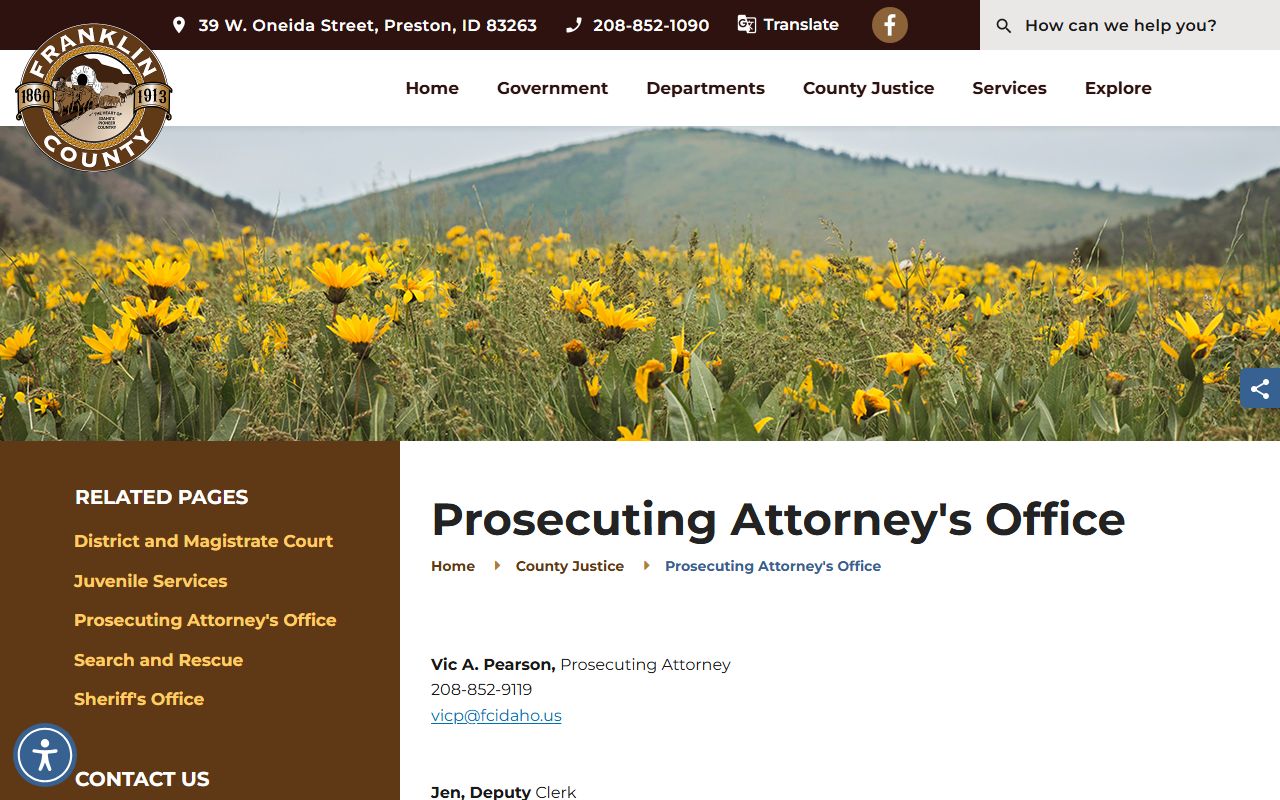
The prosecutor source helps separate the charging decision from the court record that later tracks pleas, hearings, outcomes, and sentence terms.
Search Franklin Criminal Court Records
Public lookup starts with the Idaho iCourt Portal. Smart Search can be used by case number, record number, or party name, and advanced filters can narrow by Franklin County, case type, status, file date, and judicial officer. The Franklin County court page also links hearings and results, court payments, and the public records request form. Use iCourt first for public status and event history, then use the courthouse kiosk or written request for documents, certified copies, or audio.
- Open iCourt Smart Search and enter the case number or defendant name in Last, First Middle format.
- Filter by Franklin County and criminal case type when the name search returns statewide results.
- Open the public case result and review charges, docket events, hearing dates, plea entries, and disposition when shown.
- Use iCourt Search Hearings when the goal is the next arraignment, pretrial, review, trial, or sentencing date.
- Request certified copies, specific documents, or hearing audio from the Franklin County court clerk when the public view is not enough.
Statewide criminal-history records are separate from Franklin County criminal court records. The Idaho State Police Bureau of Criminal Identification is the central repository for fingerprint arrest records reported by Idaho criminal justice agencies.
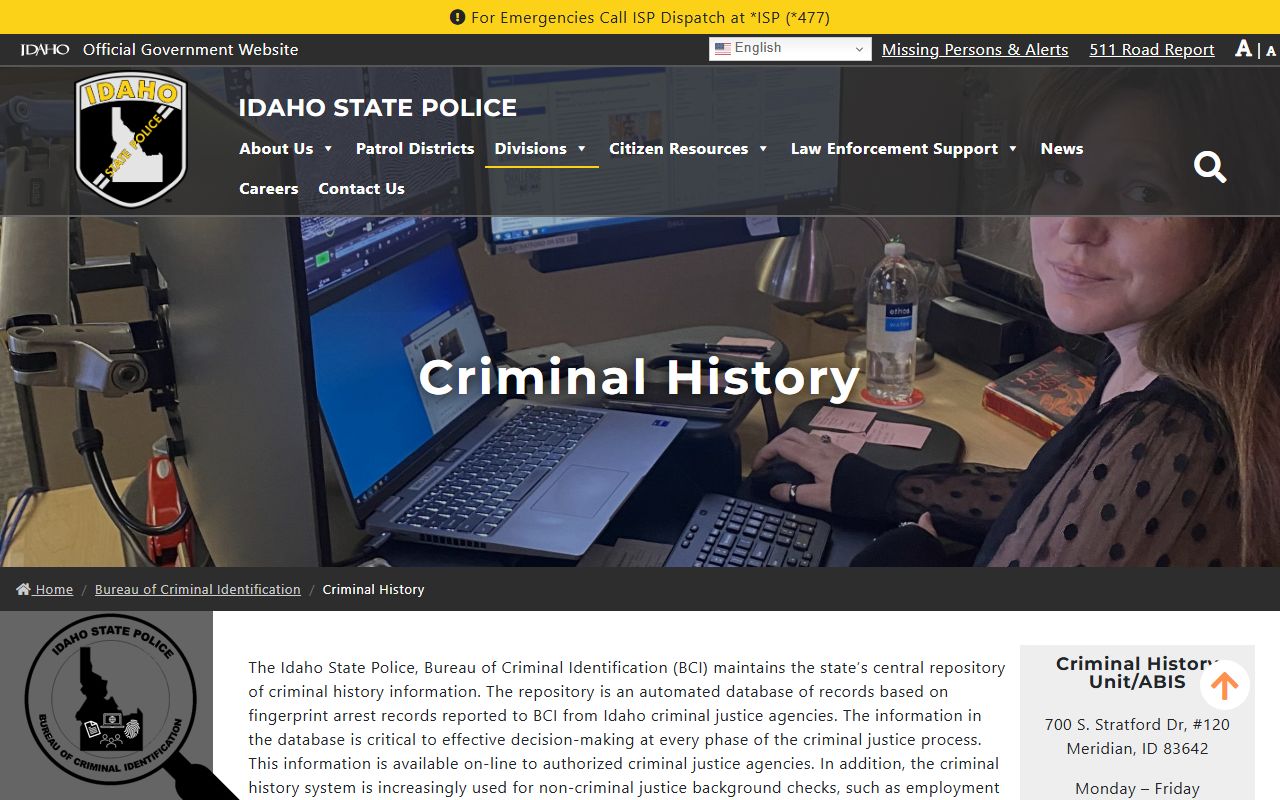
BCI criminal history can help with statewide background checks, but it does not replace the Franklin County court file or certified court copies.
Franklin Criminal Case Flow
Criminal cases move through a series of court events. Each event can leave a public docket entry, but the meaning of the entry depends on the stage. An arraignment is the first formal court appearance where rights and charges are addressed. A pretrial event may deal with motions, discovery, plea talks, or scheduling. A plea or trial resolves guilt or innocence for a charge. Disposition records the result. Sentencing records the penalty or court-ordered terms after conviction.
Case flow: Charges Filed › Arraignment › Pretrial / Motions › Plea or Trial › Disposition › Sentencing
| Stage | What Happens |
|---|---|
| Charges filed | The prosecutor or law-enforcement process brings allegations into court through a complaint, information, citation, or related filing. |
| Arraignment | The defendant is advised of rights and charges, and bond or appointed-counsel issues may be addressed. |
| Pretrial / motions | The case may show motion practice, continuances, discovery issues, plea discussions, and review hearings. |
| Plea or trial | The court record may show a guilty plea, not guilty plea, trial setting, verdict, acquittal, or dismissal. |
| Disposition | The result of a charge or case is entered, such as guilty, dismissed, amended, acquitted, or otherwise resolved. |
| Sentencing | The record may show jail, probation, fines, fees, court costs, treatment, community service, or other terms. |
For a closer look at the allegation itself before final outcome, use Franklin County arrest records and court charges as a separate topic from the full criminal case file.
Franklin Criminal Record Fields
Public criminal court records in Franklin County can show the case path, but the public portal view is limited by Idaho court rules. iCourt may show case number, caption, party index, case status, charges, chronological events, hearings, dispositions, and payments when public. It will not display social security numbers, addresses, phone numbers, driver license numbers, financial account numbers, or other personal identifiers. Sealed cases and sealed event entries do not appear in public portal results.
| Field | What It Shows |
|---|---|
| Case number | The court identifier used for search, payment, hearing lookup, and clerk copy requests. |
| Defendant name | The person charged in the criminal case, subject to redaction or access limits. |
| Charge or count | The allegation filed in court, including count structure, statute reference, severity, or amended status when shown. |
| Arraignment entry | The first formal appearance and related rights, plea, bond, or counsel events when public. |
| Hearing history | Pretrial, review, motion, trial, disposition, sentencing, and continued events. |
| Plea | The defendant's formal response to a charge, such as guilty or not guilty, when entered and public. |
| Disposition | The outcome of a charge or case, such as guilty, dismissed, amended, or acquitted. |
| Sentence | Penalty terms such as jail, probation, fines, fees, costs, treatment, or other court orders when available. |
| Payment data | Fines, fees, costs, bond, or payable case data if available through iCourt payment search. |
Charges vs Convictions
A Franklin County criminal court record can contain both charges and convictions, but the terms do not mean the same thing. A charge is an accusation filed in court. A conviction is an outcome after a guilty plea, guilty verdict, or other qualifying judgment. A charge may be amended, reduced, dismissed, or resolved without conviction. Always read the disposition and sentencing entries before treating a criminal court record as proof of conviction.
| Point | Charge | Conviction |
|---|---|---|
| Meaning | An allegation filed in court. | A final outcome based on plea, verdict, or judgment. |
| Timing | Appears early in the criminal case. | Appears after plea, verdict, or disposition. |
| Can change | May be amended, reduced, dismissed, or replaced. | May be appealed, set aside, or otherwise modified only through legal process. |
| How to verify | Read the count, statute, and current status. | Read disposition and sentence entries, then request certified copies if needed. |
| Common mistake | Treating every filed count as proven. | Ignoring dismissed or amended counts when reading the case as a whole. |
The Idaho State Police fingerprinting and background check page explains the separate background-check channel for name-based and fingerprint-related requests.
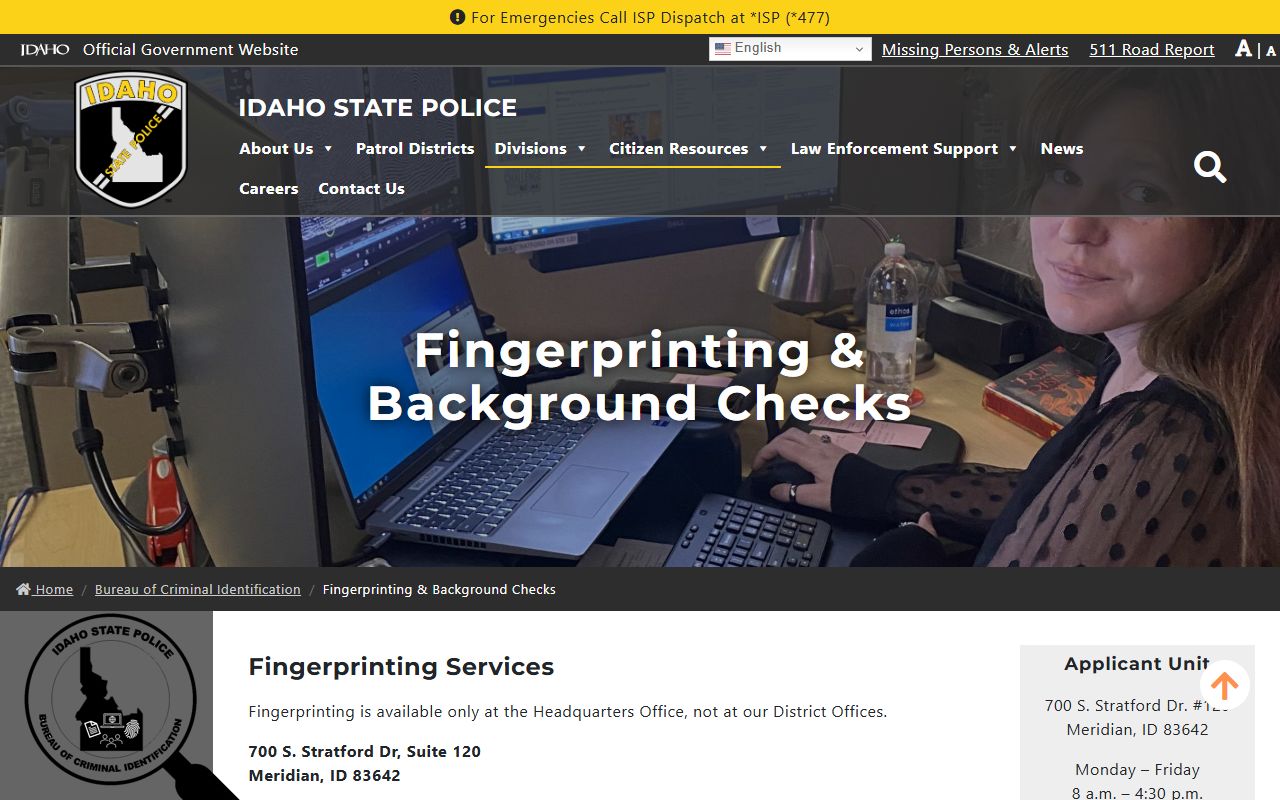
Background-check records and court records may overlap, but they are maintained by different agencies and serve different purposes.
Franklin Prosecutor and Counsel
The Franklin County Prosecuting Attorney is Vic A. Pearson. The office is listed at 39 West Oneida in Preston with phone 208-852-9119, fax 208-852-9112, and email vicp@fcidaho.us. The prosecutor works with law enforcement, files or manages state criminal charges, appears in criminal court, and participates in related juvenile or protective matters when applicable. Once a charge is filed, the court record tracks the case events rather than the prosecutor's internal work.
Appointed-counsel issues are handled through the court. Franklin County's page does not list a local public defender office directly, but Sixth District materials route public-defender information to the Idaho State Public Defender. Detention materials from a linked regional facility explain that at arraignment the judge advises rights, often sets bond, and may have an appointed-counsel application prepared when needed. Defendants should ask the Franklin County court about appointed counsel at first appearance or arraignment.
Sealed vs Expunged Records
Restricted Franklin County criminal court records require careful wording. Idaho sources in the research emphasize sealed records, ICAR 32-exempt records, juvenile confidentiality, law-enforcement exemptions, and self-help forms labeled for set-aside relief. A sealed record is hidden from public access by court rule or order. Expungement or set-aside relief can limit public availability or change the legal effect of a record, but it should not be described as automatic deletion unless a specific court order and statute say so.
| Point | Sealed | Expunged / Set Aside |
|---|---|---|
| Public visibility | Hidden from public portal access by rule or court order. | May limit public availability or legal effect depending on the order and Idaho law. |
| Where handled | Through court access rules, sealing orders, and clerk procedures. | Through a filed request, eligible relief process, or court order. |
| Portal result | May not appear in public iCourt search results. | May change what appears or how the record is treated after relief is granted. |
| Juvenile impact | Juvenile records have special confidentiality rules under Idaho law. | Juvenile relief depends on separate rules and case facts. |
| Practical step | Ask the clerk about the proper access or sealing procedure. | Use Idaho Court Assistance forms or legal advice before filing. |
Idaho Code 20-525 is the official juvenile-record statute relevant to Franklin County criminal court records involving minors.
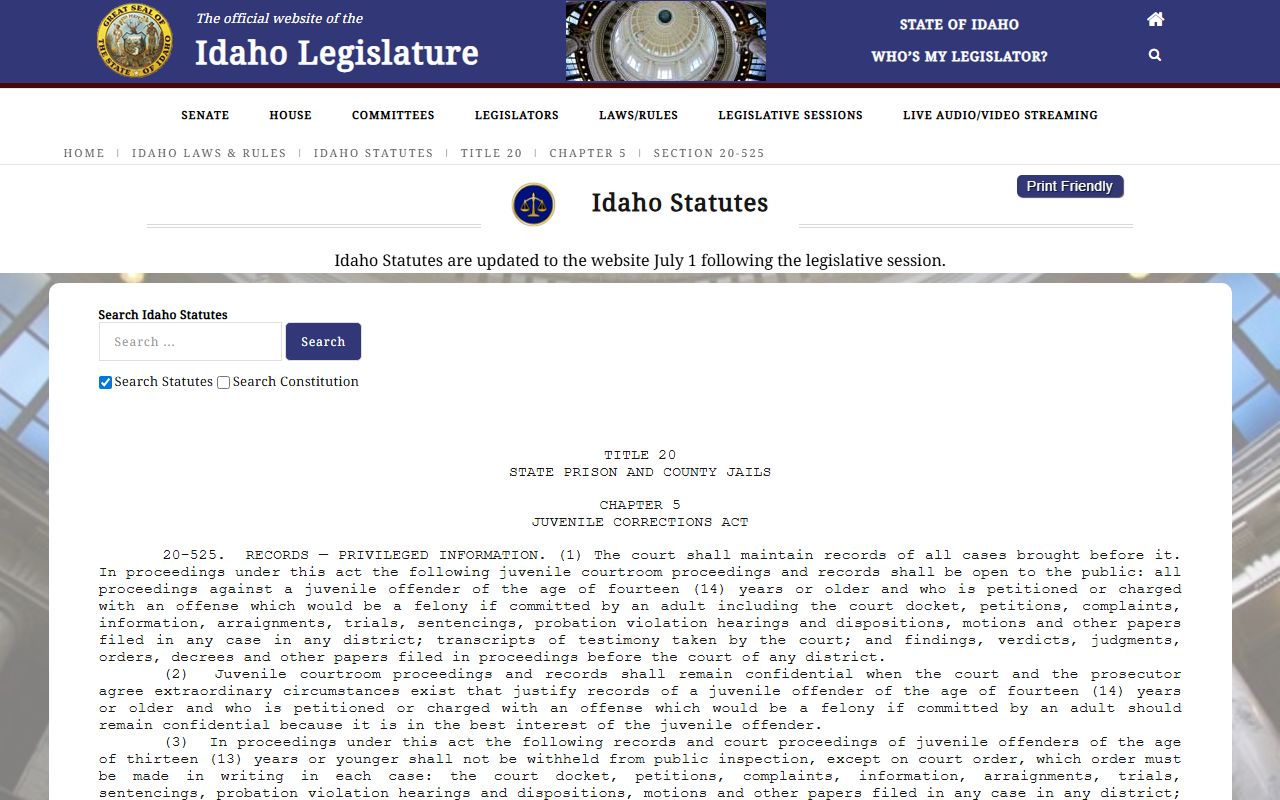
Juvenile access rules explain why some criminal-adjacent court information cannot be treated like an adult public docket.
Access Franklin Criminal Court Records
Public access to Franklin County criminal court records comes from both general public-record principles and court-specific access rules. Idaho Code 74-102 states the general right to inspect and copy public records unless a law provides otherwise. Idaho Court Administrative Rule 32 controls court-record access and explains why sealed or exempt criminal records do not appear in public portal results. Idaho Code 74-105 can limit law-enforcement and investigatory records, which matters when an arrest, warrant, or active investigation is confused with a court case file.
Franklin County uses a written records request form for copies, certified documents, and audio. Copies are listed at $1.00 per page, certified documents at $2.00 per document, and audio at $12.00 on a flash drive. Files before October 1, 2018 can trigger a $20.00 nonrefundable research fee. The form also requires enough detail to find the record, including party names, case number if known, requested document titles, requester contact information, and signature.
Key point: Public iCourt access can show criminal case events, but certified criminal court records come from the clerk's official copy process.
Restricted Franklin Criminal Records
Restricted criminal court records include sealed cases, sealed events, juvenile records, protected personal identifiers, and information made confidential by court order or Idaho law. Public iCourt access omits social security numbers, addresses, phone numbers, driver license numbers, financial account numbers, and other personal identifiers. Law-enforcement files may be limited when they involve active investigations, informants, sealed warrants, or other protected details. Mental-health or protected-person material can also be restricted even if a hearing category appears in iCourt.
A missing public result should be checked through official channels before any conclusion is drawn. The case may be sealed, entered under a different name, outside the public electronic date range, or available only through courthouse access. If the issue is custody or current jail location, check the sheriff or detention channels rather than the criminal court record alone. If the issue is an active warrant, court docket events and the sheriff's office may both need to be checked.
The official Idaho law-enforcement record exemptions source is relevant when criminal court questions overlap with sheriff, arrest, warrant, or investigation records.
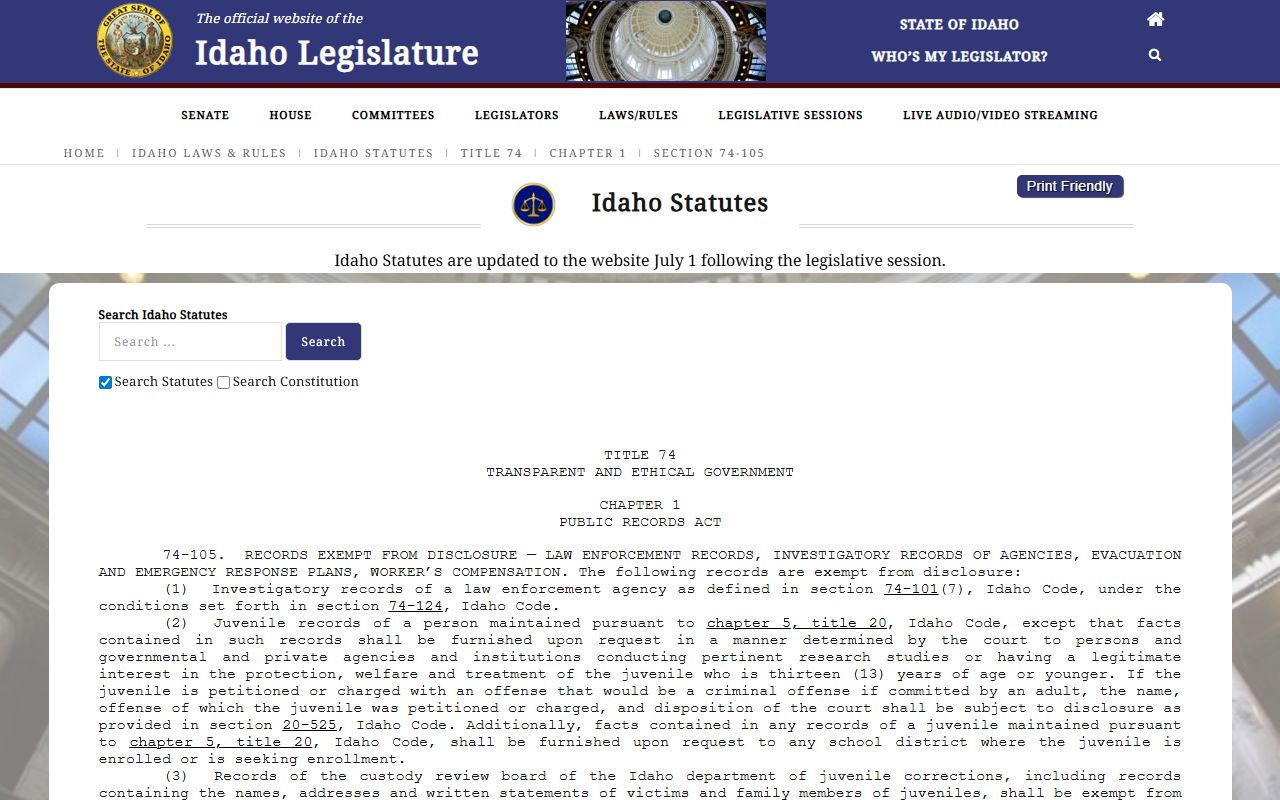
The exemption source helps explain why a court record may be public while related investigative material remains limited.